
Keeping your Pool Water Balanced is one of the most Important parts of owning a Pool in Austin, TX. Between the Texas heat, strong sunlight, rain, and regular summer use, your pool water can change quickly.
Knowing how to test your water, understand the essential chemicals, and spot early signs of an imbalance can help you avoid cloudy water, algae, and damage to your pool. Before getting into the different parts of pool water chemistry, it helps to understand why water balance matters and what can happen when it gets off track.
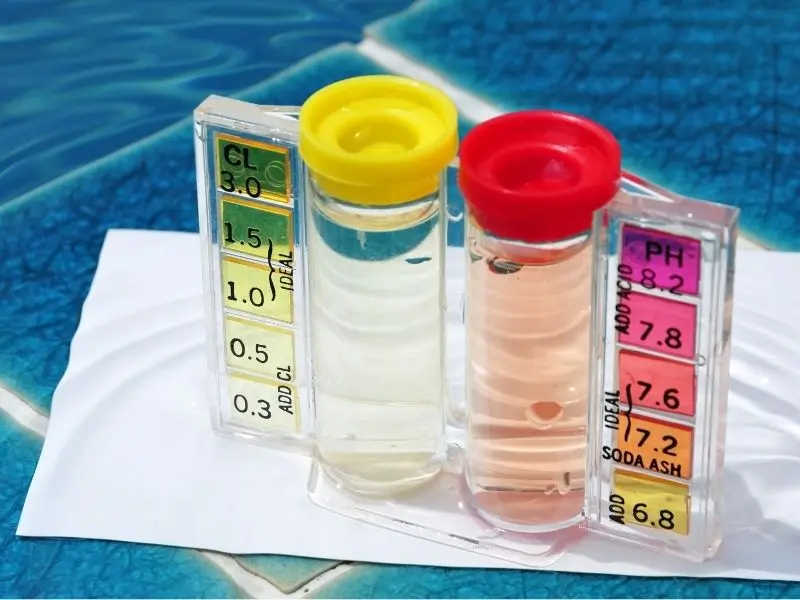
The 4 Most Important Parts of Pool Water Chemistry
| Chemical | What It Is | What It Does | Why It Matters |
|---|---|---|---|
| Chlorine | Keeping Your Pool Sanitized | Kills contaminants and helps prevent algae growth. | Keeps your pool water clean and safer for swimming. |
| pH | Keeping the Water Balanced | Controls how acidic or alkaline the water is. | Helps protect swimmers, surfaces, and equipment while allowing chlorine to work properly. |
| Alkalinity | Keeping pH Stable | Acts as a buffer that helps keep pH from changing too quickly. | Makes water chemistry easier to maintain and helps prevent sudden pH swings. |
| Calcium Hardness | Protecting Your Pool | Controls the amount of dissolved calcium in the water. | Helps prevent damage from low calcium or scale buildup from excessive calcium. |
What You Need to Test and keep your Pool Water Balanced
Once you understand the four main parts of pool chemistry, the next step is knowing what to use to keep them in check. You don’t need a garage full of pool chemicals or complicated equipment. A basic testing kit and a few essential chemicals are enough for most homeowners to stay on top of their pool water.
Pool Water Test Kits
A good test kit lets you see what’s actually happening in your pool instead of guessing. Look for a kit that checks chlorine, pH, alkalinity, and calcium hardness. Test strips are quick and convenient for regular checks, while liquid test kits can provide more detailed readings. Testing your water regularly helps you catch small changes before they turn into cloudy water, algae, or other problems.
Essential Pool Chemicals
The chemicals you need will depend on your water test results. Chlorine keeps the water sanitized, while pH increaser or decreaser helps bring pH back into balance. Alkalinity increaser can help stabilize pH, and calcium hardness increaser may be needed when calcium levels are too low. The key is to test first and add only what your pool actually needs rather than adding chemicals blindly
How to Maintain Your Pool Water now that you have the Tools
Now that you know what to test and which pool chemicals help keep your water balanced, the next step is building a simple routine. Pool maintenance doesn’t have to be complicated. The key is to test regularly, make small adjustments when needed, and keep your water circulating properly. Staying consistent is much easier than waiting until your pool turns cloudy or develops algae.
Test Your Water Regularly
Regular testing helps you catch changes before they become bigger problems. Check your chlorine, pH, alkalinity, and calcium hardness and compare the results with the recommended ranges for your pool. How often you test can depend on weather, pool use, and water conditions, but checking more frequently during hot Austin summers or after heavy rain can help you stay ahead of changes.
Add Chemicals When Needed
Don’t add pool chemicals simply because it’s part of your routine. Test first, then adjust what your water actually needs. Add the appropriate chemical according to the test results and product directions, allowing the water to circulate so the chemical can distribute properly. Making smaller adjustments is generally easier to manage than trying to correct a major imbalance all at once.
Common Pool Water Problems that You might encounter
Even with regular maintenance, pool water can sometimes get out of balance. Knowing what you’re looking at can help you fix the problem before it becomes a bigger headache and save you from staring at a green pool wondering where you made a mistake
Cloudy Water
Cloudy water usually means something has changed with your pool’s chemistry, filtration, or cleanliness. Common causes include:
- Unbalanced pH or alkalinity: Can make the water look dull or hazy.
- Low chlorine: Gives contaminants and algae a chance to build up.
- Dirty filter: Makes it harder for your system to remove fine particles.
- Heavy pool use: Swimmers introduce oils, sweat, sunscreen, and other contaminants.
Start by testing your water and checking the filter before adding chemicals. Guessing with pool chemicals is a little like seasoning food with your eyes closed it doesn’t always end well.
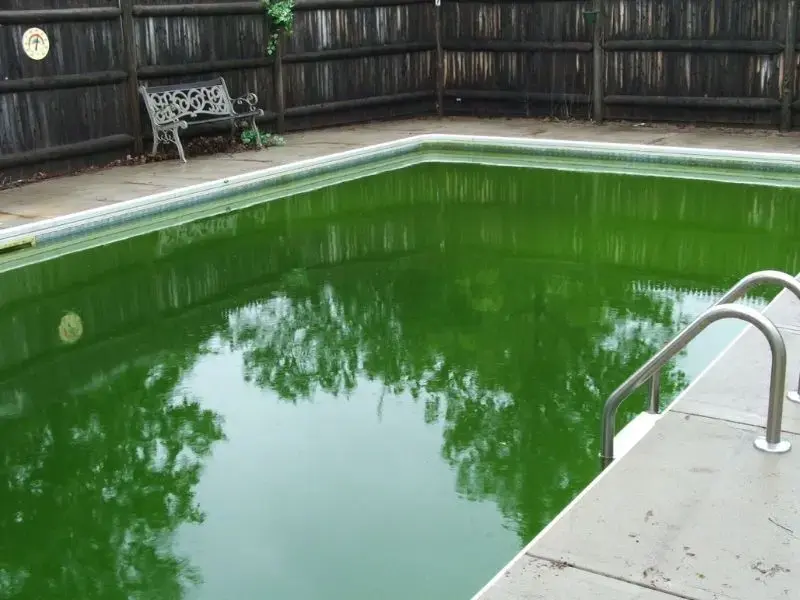
Green Water and Algae
A green pool is usually a sign that algae has gotten comfortable. Low chlorine, poor circulation, and inconsistent cleaning are common reasons algae can take over. To get your pool back on track:
- Test the water: Check chlorine, pH, and alkalinity
- Brush the pool: Loosen algae from walls, steps, and the floor
- Shock the pool: Use the appropriate treatment for the condition of the water
- Run the filter: Give your filtration system time to remove dead algae
- Clean the filter: Remove buildup so water can circulate properly
How Austin Weather Affects Pool Chemistry
Austin weather doesn’t exactly make pool maintenance boring. Hot temperatures, strong sunlight, and sudden storms can all affect your water chemistry, so your routine may need to change throughout the year.
- Check chlorine more often to make sure your sanitizer remains effective.
- Monitor water levels and add water when needed.
- Test pH and alkalinity regularly to catch changes early.
- Keep your pump and filter running properly to maintain good circulation.
Why Routine Care for youre Pool is Important
Keeping your pool water clean and balanced doesn’t have to be complicated. Regular testing, proper chemical levels, good filtration, and a little extra attention during Austin’s hot weather and heavy storms can prevent many common pool problems.
The key is consistency small adjustments made regularly are much easier than trying to rescue a pool after the water has already gone cloudy or green. When your chemistry refuses to cooperate, don’t keep guessing: a professional can help identify the underlying problem and get your pool back on track.
Pool Water Chemistry FAQs
1. Why does my pool keep turning cloudy?
Cloudy water can come from unbalanced pH or alkalinity, low chlorine, heavy pool use, or a filter that isn’t removing contaminants properly. Start by testing your water and checking that your filtration system is working correctly.
2. Why is my pool turning green even when I add chlorine?
Green water is usually caused by algae, but simply adding more chlorine may not solve the underlying problem. Poor circulation, incorrect pH, or a dirty filter can make it harder to clear the water. Testing your chemistry and addressing the source of the problem is the better approach.
3. Why does my pool smell strongly like chlorine?
A strong chlorine smell doesn’t necessarily mean there’s too much chlorine. It can occur when chlorine reacts with contaminants in the water. Testing the water and maintaining proper circulation can help determine what’s causing the smell.
4. How often should I test my pool water?
There isn’t one schedule that works for every pool. Regular testing is especially important during Austin’s hot summer months, after heavy rain, and when your pool gets a lot of use. Testing consistently helps you catch chemistry changes before they become larger problems.
When Should You Call a Pool Professional?
If your pool keeps going cloudy, turning green, or losing chlorine shortly after you balance it, there may be more going on than a simple chemical adjustment. Problems with circulation, filtration, algae, or water quality can make chemistry difficult to control. If you’ve tested the water, made the proper adjustments, and still can’t keep it balanced, bringing in a pool professional can save you time, chemicals, and frustration.
At Blakk Brikk Pool Co, we help Austin homeowners with pool cleaning, maintenance, and repairs.
Need help getting your pool back in shape? Contact Blakk Brikk Pool Co for professional pool service in Austin.


Be the first to share your thoughts!